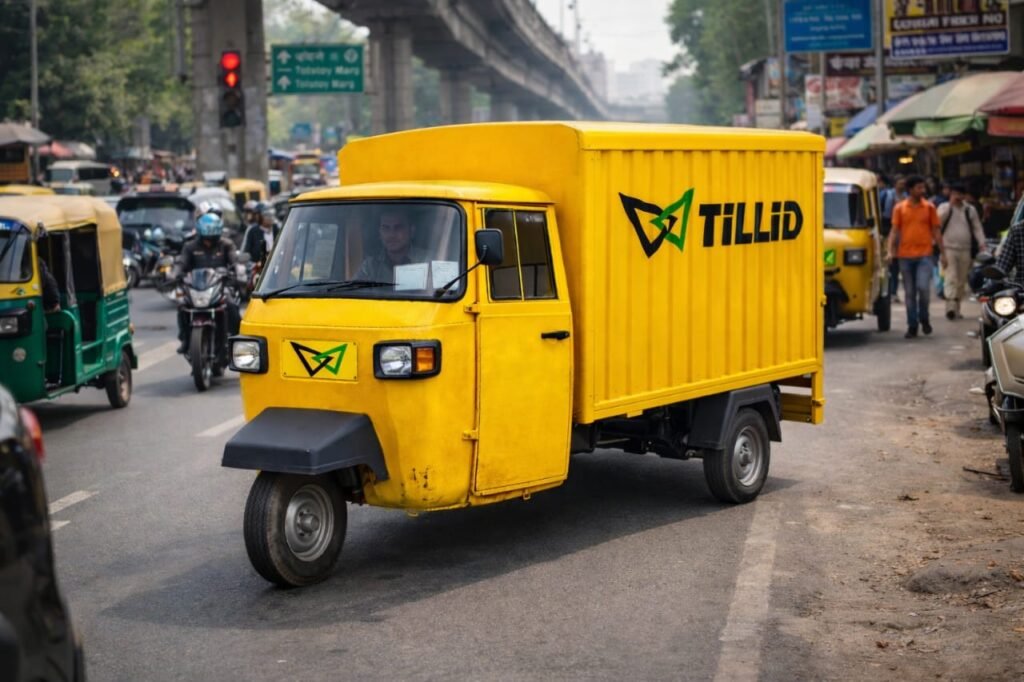
India’s electric vehicle revolution is accelerating—and at the center of this transformation are electric three-wheelers. For commercial applications like last-mile delivery, logistics, and passenger transport, EV three-wheelers are not just an alternative—they are becoming the default choice.
For companies like Tillid Motors, this shift presents a massive opportunity to lead the future of sustainable and profitable mobility.
India: The Global Leader in Electric Three-Wheelers
India has emerged as the world’s largest market for electric three-wheelers, with sales reaching nearly 7 lakh units annually and growing steadily year-on-year.
In fact, EVs now account for over 60% of total three-wheeler sales in the country—far ahead of cars and two-wheelers.
👉 This clearly shows:
The EV transition in India is being led by commercial 3-wheelers.
1. Rapid Adoption in Last-Mile Logistics
Electric three-wheelers are dominating the last-mile delivery ecosystem, especially in:
- E-commerce logistics
- Hyperlocal delivery (groceries, food, parcels)
- B2B distribution
Their low operating cost and high efficiency make them ideal for businesses looking to scale operations profitably.
Recent data also shows steady demand growth, with over 64,000 electric three-wheelers registered in a single month (April 2026).
2. Strong Cost Advantage Driving Growth
One of the biggest reasons behind EV adoption is economics.
Compared to diesel or CNG vehicles:
- EVs offer significantly lower cost per km
- Maintenance costs are minimal
- Total cost of ownership is much lower
For fleet operators, this means:
- Faster ROI
- Higher margins
- Scalable business models
👉 This is why EVs are no longer just eco-friendly—they are business-friendly.
3. Government Policies Accelerating Adoption
Government initiatives are playing a major role in EV growth:
- Subsidy programs like FAME and PM E-DRIVE
- Incentives for commercial EV adoption
- Focus on electrifying fleets
These policies aim to deploy hundreds of thousands of electric three-wheelers for commercial use.
4. Rise of Fleet Electrification
Large fleet operators are rapidly transitioning to electric:
- Logistics companies are electrifying delivery fleets
- Ride-sharing and mobility platforms are adopting EVs
- Corporates are focusing on sustainability goals
This trend is creating demand for:
- Fleet-ready EV solutions
- Telematics and fleet management systems
- Reliable charging and service ecosystems
5. Technology Advancements Boosting Confidence
Modern EV three-wheelers are far more advanced than early models.
Key innovations include:
- Improved battery range and durability
- Smart telematics and connectivity
- High-torque motors for better load handling
- Regenerative braking for efficiency
These advancements are making EVs:
- More reliable
- More efficient
- More suitable for Indian conditions
6. Expansion Beyond Tier 1 Cities
EV adoption is no longer limited to metros.
Growth is now visible in:
- Tier 2 and Tier 3 cities
- Semi-urban logistics hubs
- Rural mobility applications
This expansion is driven by:
- Lower operating costs
- Increasing awareness
- Growing charging infrastructure
7. Sustainability Becoming a Business Priority
Businesses are increasingly focusing on:
- Reducing carbon footprint
- Meeting ESG (Environmental, Social, Governance) goals
- Building eco-friendly brand image
Electric three-wheelers play a key role in achieving these goals by:
- Eliminating tailpipe emissions
- Reducing urban pollution
- Supporting green logistics
8. The Future: Scalable, Connected, Electric
The future of commercial mobility in India is:
- Electric – driven by cost and policy
- Connected – powered by data and telematics
- Scalable – designed for fleet expansion
Electric three-wheelers will continue to dominate because they offer the perfect balance of:
- Affordability
- Efficiency
- Practicality
Conclusion
India’s EV revolution is not waiting for the future—it’s already happening, and electric three-wheelers are leading the charge.
For businesses, this is the right time to transition. And for companies like Tillid Motors, it’s an opportunity to deliver innovative, reliable, and scalable electric mobility solutions.
The trend is clear:
Electric three-wheelers are not just the future—they are the present of commercial mobility in India.